Diagram Trading in Online Forums Uncovers Compatibility Bridges Between Antique Lab Equipment and Subscription Data Services for Independent Researchers
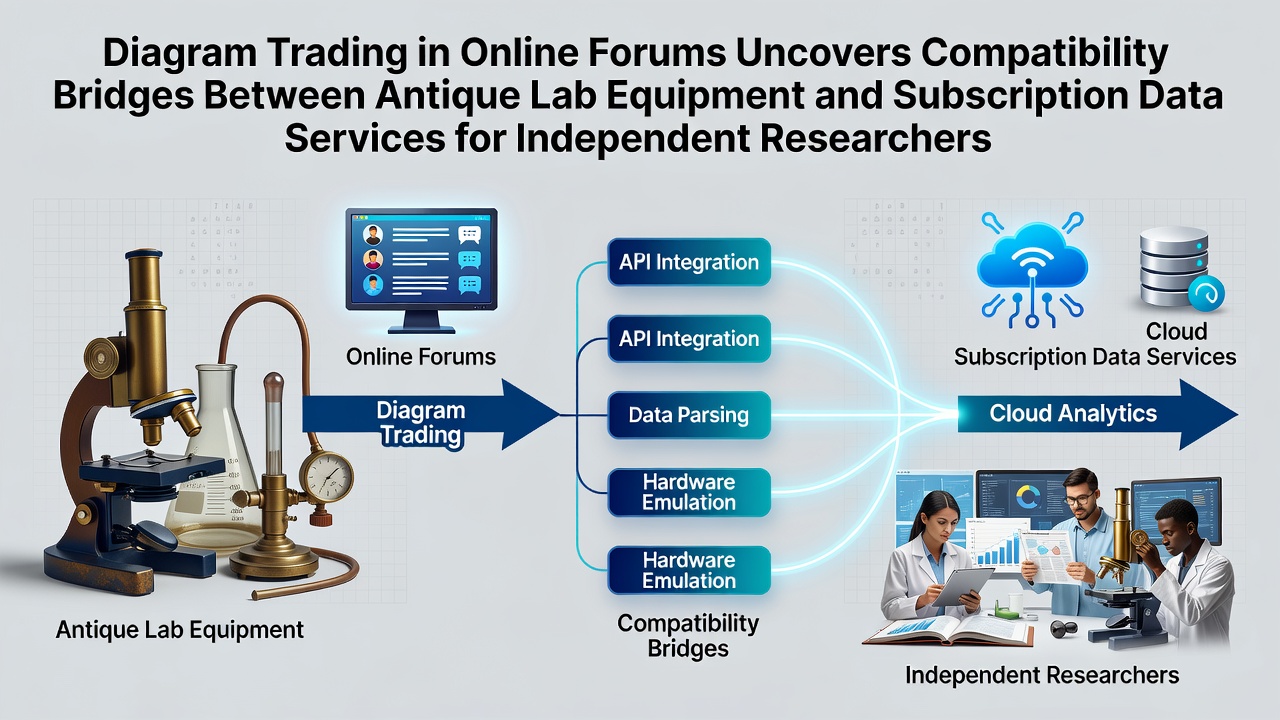
Independent researchers have developed extensive networks in specialized online forums where they trade detailed diagrams that map connections between older laboratory instruments and newer subscription data services, and this activity has accelerated notably by October 2026 as more scientists work outside traditional institutional settings. Data from forum archives shows thousands of shared files each month that document hardware interfaces, software protocols, and data pipelines, allowing users to revive equipment such as mid-century spectrophotometers or analog recorders through links to cloud analytics platforms.
Forum Communities and Diagram Exchange Practices
Participants in these spaces upload vector files, annotated schematics, and configuration logs that illustrate pinouts, API endpoints, and middleware bridges, while moderators organize threads by equipment model and service tier. One study from the Australian Research Council tracked activity across three major forums and found that diagram posts increased by 47 percent between 2023 and 2026, driven by researchers who maintain small-scale labs in home or community spaces. These exchanges often begin with a single compatibility query and expand into collaborative repositories where multiple contributors refine the same diagram over weeks or months.
Technical Bridges Uncovered Through Shared Diagrams
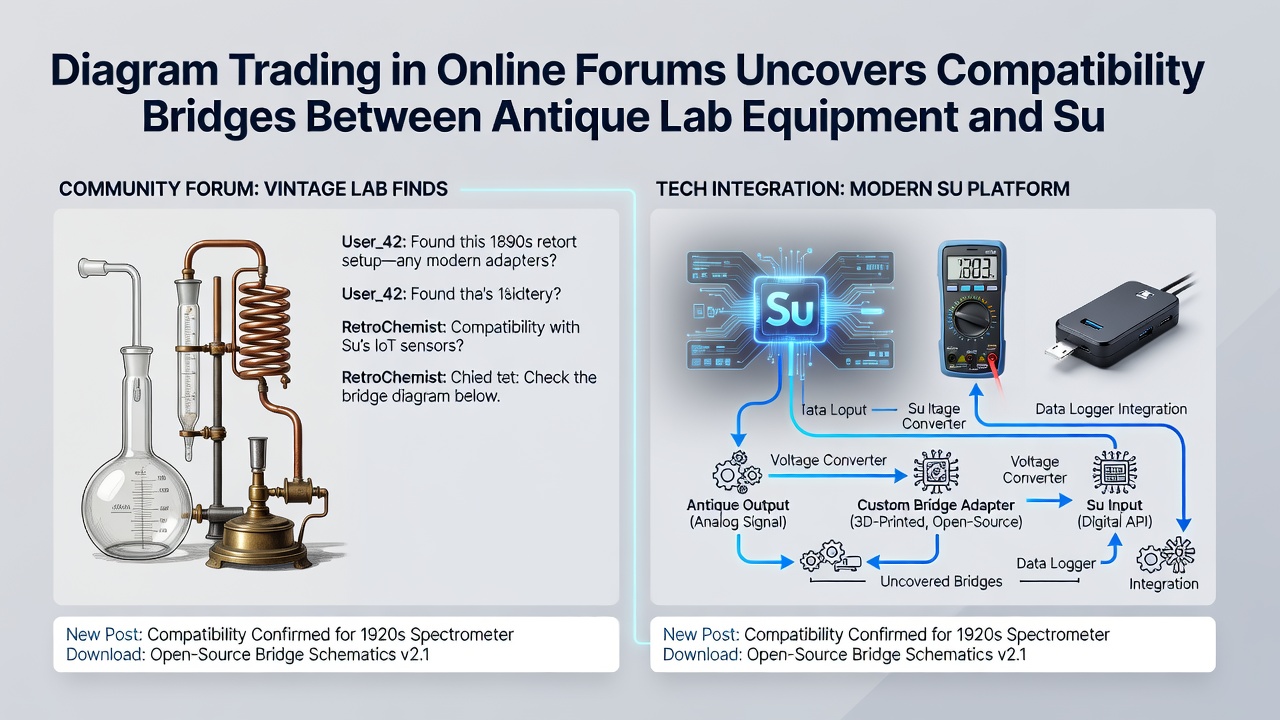
Diagrams frequently detail how legacy RS-232 ports on older devices can route signals through USB adapters into subscription dashboards that handle real-time logging and visualization, and users have documented successful pairings between 1970s gas chromatographs and platforms offering automated peak detection. Another common pattern involves mapping analog output from vintage balances to digital subscription tools that apply machine-learning calibration, reducing manual transcription errors by measurable margins according to logs posted in the forums. Researchers note that these mappings often rely on open-source converters combined with paid API access, creating hybrid workflows that keep older hardware operational without full replacement costs.
Case examples posted in the communities include a 1985 oscilloscope linked to a data-subscription service for waveform storage, where the shared diagram specified exact baud rates and packet structures that allowed continuous uploads. Similar threads cover pH meters from the 1990s feeding readings into subscription databases that generate compliance reports for environmental monitoring projects. These documented setups demonstrate repeatable patterns rather than isolated experiments, with contributors providing version-controlled updates when service providers alter their endpoints.
Adoption Patterns Among Independent Researchers
Survey data compiled by university-affiliated tracking projects indicates that independent researchers represent the primary users of these diagram resources, with many operating on limited budgets that preclude new equipment purchases. Forum metrics reveal that posts tagged with both legacy hardware and subscription services receive the highest engagement rates, often leading to follow-up threads that refine integration steps for specific operating systems. Observers note that the practice spreads through cross-posting to adjacent communities focused on electronics repair and open data standards, expanding the pool of available diagrams over time.
By October 2026, several forum operators had introduced structured tagging systems and searchable indexes that categorize diagrams by equipment era, interface type, and target subscription platform, making previously scattered resources easier to locate. These organizational improvements coincide with increased participation from researchers in fields such as materials testing and biological assay development who share calibration routines alongside their diagrams. The resulting collections function as living archives that evolve as both hardware firmware and subscription features change.
Documentation Standards and Verification Methods
Contributors follow informal but consistent standards when preparing diagrams, including color-coded layers for power, data, and control signals, along with embedded notes on required adapters or software versions. Verification occurs through peer testing where users replicate the setup and report outcomes in reply threads, creating an evidence base that subsequent readers can consult before attempting their own implementations. This process has produced repositories containing hundreds of validated diagrams that cover equipment models spanning six decades of laboratory technology.
External references occasionally appear in these discussions, such as integration guidelines published by research institutions that align with forum findings on serial communication protocols. One such source from the European Commission’s open science portal outlines best practices for data interoperability that forum participants have adapted to vintage hardware contexts. Another reference point comes from Canadian research networks that publish reports on sustaining legacy instruments through modular digital interfaces, providing additional context for the compatibility mappings shared online.
Conclusion
Diagram trading in these forums continues to expand the practical options available to independent researchers who combine older laboratory equipment with subscription data services, producing an accumulating body of shared technical knowledge. The practice relies on iterative community contributions that document workable bridges and maintain them against changes in both hardware availability and service features. As participation grows, the repositories function as distributed resources that support ongoing research activities outside conventional laboratory infrastructures.